חיבור
אנחנו קהילה של אנשים שאינם מושלמים


Right before Kol Nidre, the most important service on the Jewish calendar, we say these words:
“With the consent of the Almighty, and consent of this congregation, in a convocation of the heavenly court, and a convocation of the lower court, we hereby grant permission to pray with transgressors.”
Why is it worded like that? It seems to hold the individual in higher regard than the community, as if we were morally superior to our fellow congregants. In reality, it’s not about elevating ourselves above “transgressors.” It’s about understanding that none of us are without fault in our lives, and that all of us can make mistakes.
This line is an invitation. A disclaimer that while during our repentance over the following day, we should not feel that we are somehow exempt from the words uttered under our breath. Yom Kippur asks us to treat judgment as an afterthought, including judgment of ourselves. By saying this line aloud, in the presence of our community, we acknowledge that a community with only the “pure” would be an empty community. To exclude the word “transgressors” would be to exclude ourselves.
When we acknowledge that none of us are exempt from failure, we also face the hard truth that the world around us feels full of brokenness too. For instance, this year, I expected the war in Israel to be over and the hostages to be home. To be frank, I often find people saying that these consequential events in the world are the sum of our decisions judged by Hashem. I struggle with that idea. By this rationale, my sins and transgressions affect the outcomes and impacts of events thousands of miles away. I find it hard to believe this could be true. The Ten Days of Atonement, stretching from Rosh Hashanah to Yom Kippur (עֲשֶׂרֶת יְמֵי תְּשׁוּבָה), are about these decisions we claim to have such a large impact. These ten days remind me that much is out of my control, and that the true work of the Ten Days of Atonement is not about changing the world, but changing my actions, my intentions, and my relationships. It is these small choices that, in Judaism, we believe affect our existence under Hashem. This is a period of time to reflect on our regrettable decisions and how, in the coming year, we will amend them. A time in Judaism where these decisions matter the most.
Think about it like a warmup for a game. Mistakes you make in the warmup won’t actually affect your physical performance in the game (it doesn’t change the odds) but rather mentally affect you. You have in the back of your mind: “If I screwed this up in the warmup, then how can I do it when it matters?” That’s the reality of these ten days. The warmup prepares you, but the real test comes when the game begins. The game is where the real decisions are made and records are won or lost. This week is where our fate, the meaning and significance of our year, is decided, where we repent for the mistakes we made.
Therefore, when I think of this period as the “game,” I know it’s not about a score. It’s about showing up ready to play with honesty and an open mind. These ten days leading up to Yom Kippur remind us that our prayers are not about perfection, but about truth. That’s what it means to pray with “transgressors,” to admit that throughout this past year, we all have been flawed, and to let that honesty bring our community closer to Hashem.
All views expressed on content written for The Shofar represent the opinions and thoughts of the individual authors. The author biography represents the author at the time in which they were in BBYO.
גלה עוד סיפורים
חיבור

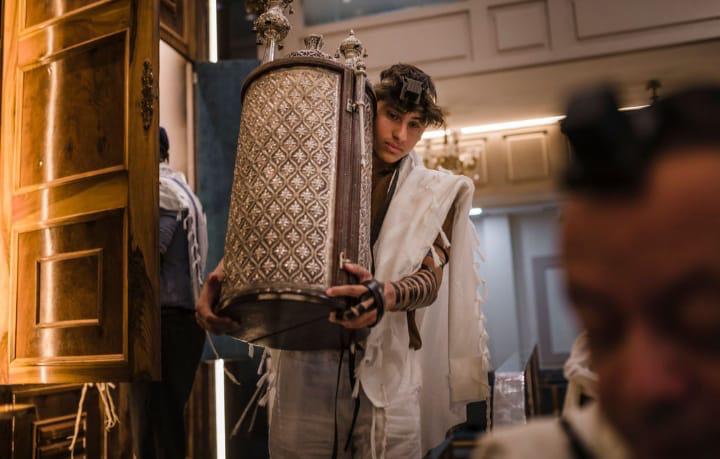
Parshat Ki Tetze: Do Not Look Away
Ki Tetze reminds us that being Jewish means refusing to look away—choosing to help others, speak up when something is wrong, and treat every person with care and respect.
חיבור
One Religion, Many Stories
What's its like getting to meet Jews from across the world and learning about their cultures and finding out what we have in common.
חיבור

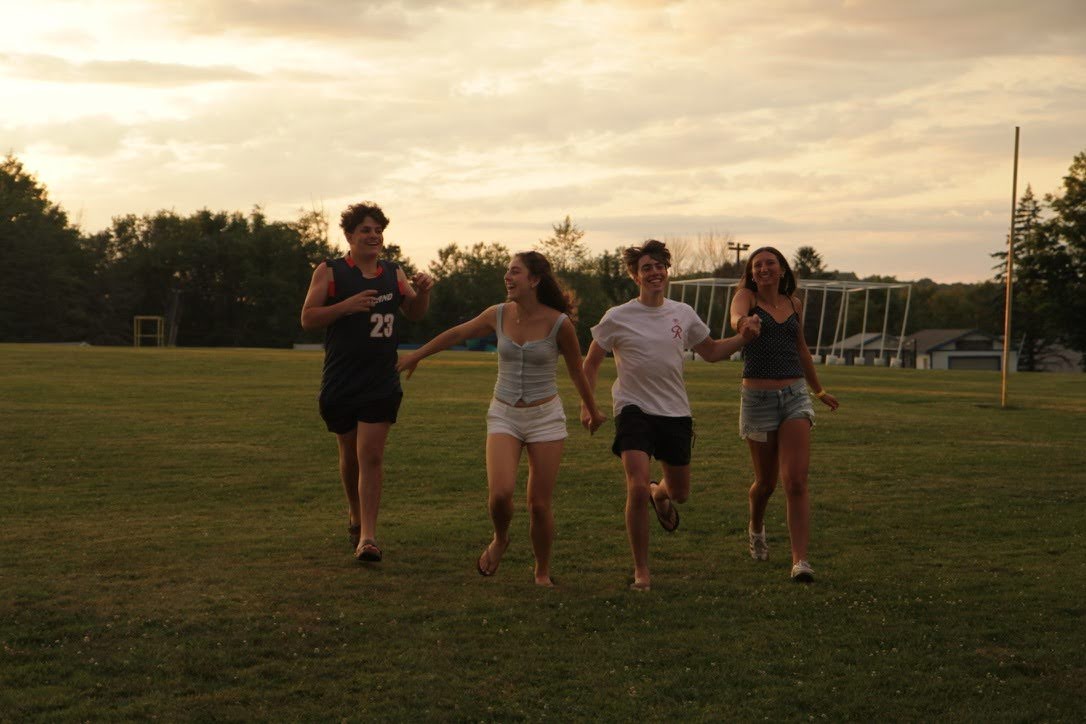
These Aren’t My Friends. They’re My People. There’s a Difference.
From the hammocks to the lake and to the stars, one BBG reflects on reuniting with the people who made it all unforgettable, and who never really felt faraway.